



What are the characteristics and advantages of an open single axis precision punch press
As a core equipment in the field of metal processing, the open single axis precision punch press is characterized by high precision, high efficiency, and reliability, and is widely used in precision stamping production in industries such as electronics, automobiles, and home appliances.
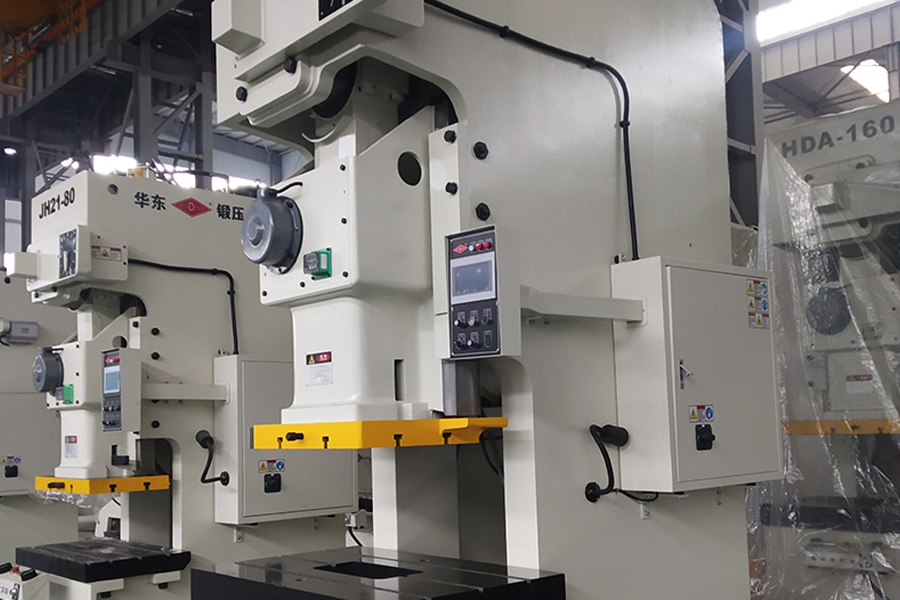
1、 Structural design features
Open body design with open operating space:Adopting a "C" - or "O" - shaped open structure, providing a spacious work area for mold installation, debugging, and waste cleaning, especially suitable for multiple applications Process composite mold or large workpiece processing.
Quick mold change support:The open design shortens the mold replacement time, coupled with a fast clamping system, which can significantly improve production flexibility and adapt to customized production needs of small batches and multiple varieties.
Rigid connection structure of single axis transmission system:The crankshaft is directly connected to the connecting rod, reducing transmission links, minimizing energy loss, and ensuring the stability and efficiency of power transmission.
Strong ability to resist eccentric loads:The single axis design optimizes the force distribution, maintaining machine accuracy and extending the service life of the mold even under eccentric loads or asymmetric stamping.
High rigidity frame integral casting body:Adopting high-strength cast iron or alloy materials for integrated molding, it has strong absorption of impact and vibration, reduces deformation during processing, and ensures long-term stability.
Finite Element Optimization Design:Through computer simulation analysis, optimize the stress distribution of the fuselage structure, further improve fatigue resistance and dynamic response speed.
2、 Accuracy and performance advantages
Micro level machining precision high-precision guide rail:Equipped with linear or ball guides, coupled with precision grinding technology, to ensure the straightness and parallelism of the slider motion trajectory, with a repeat positioning accuracy of up to ± 0.005mm.
Gap adjustment mechanism:By using wedge-shaped blocks or hydraulic systems to achieve fine adjustment of mold clearance, it can adapt to different material thicknesses and stamping process requirements, reduce burrs and defect rates.
High speed stable operation and high-frequency stamping capability:The main motor power is matched with the flywheel energy storage design, supporting continuous stamping at hundreds or even thousands of times per minute, meeting the high-speed production needs of electronic components, connectors, and more.
Dynamic Balance Technology:The crankshaft and flywheel undergo precise dynamic balancing correction to reduce vibration and noise, ensure smooth operation at high speeds, and extend equipment life.
Intelligent control system CNC operation interface:Adopting touch screen or industrial computer control, supporting parameter storage, fault diagnosis, and remote monitoring, simplifying the operation process, and reducing human errors.
Pressure monitoring and protection:Real time monitoring of stamping pressure, automatic shutdown in case of overload, avoiding mold damage or equipment failure, and improving production safety.
3、 Application scenarios and industry adaptability
Precision parts processing in the electronics industry:Suitable for stamping micro metal parts such as phone frames and SIM card holders, meeting the development trend of lightweight and high-strength.
Multi station progressive die:Combining the feeding machine to achieve continuous stamping, forming complex parts in one go, improving material utilization and production efficiency.
Automotive manufacturing body coverings:Process high-strength parts such as door hinges and engine hood locks to ensure dimensional accuracy and surface quality, meeting the lightweight requirements of automobiles.
Production of safety components: such as seat belt buckles, airbag triggers, etc., require high-precision stamping to ensure functional reliability.
Home appliances and hardware casings and structural components:Produce refrigerator door hinges, washing machine pulsars, etc., and achieve large-scale manufacturing through automated production lines to reduce costs.
Decoration processing:Such as metal nameplates, handles, etc., complex shapes and surface treatment requirements are achieved through precision stamping.
4、 Maintenance and cost-effectiveness
Low maintenance design modular structure:Key components such as crankshafts and connecting rods are designed with standardization to facilitate quick replacement and maintenance, reducing downtime.
Lubrication system optimization:Automatic centralized lubrication or forced lubrication devices ensure sufficient lubrication of moving parts, reduce wear, and extend service life.
Long term cost advantage, high-precision reduction of waste:Stable processing quality reduces the defect rate, saves raw materials and rework costs.
Energy efficiency improvement:Optimize the transmission system and motor control to reduce energy consumption per unit product, in line with the trend of green manufacturing.