



The differences in function, structure, application scenarios, and working principles between press machines and punch presses
There are differences between press machines and punch presses in terms of functionality, structure, application scenarios, and working principles. The following is a specific analysis:
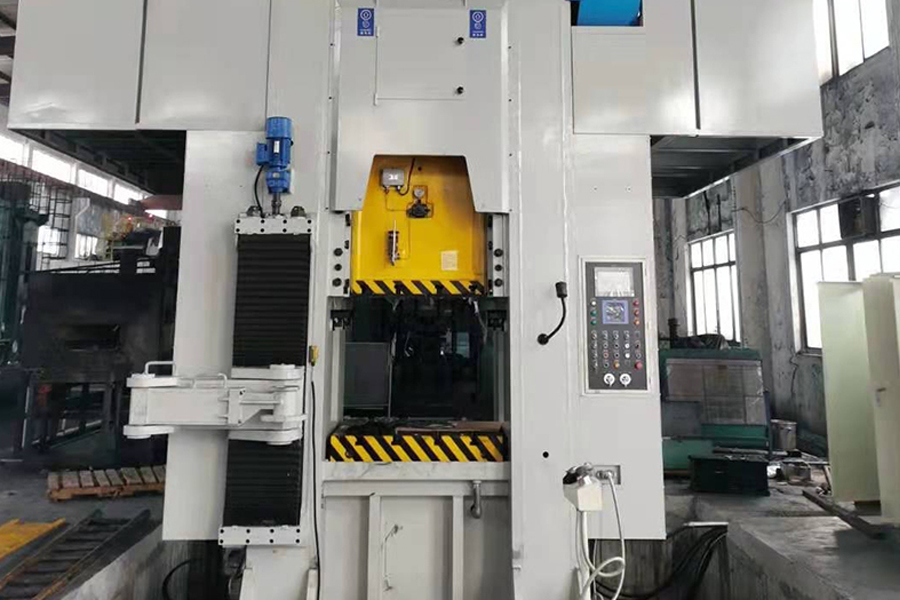
1. Function and purpose
Press
Function: Generate pressure through hydraulic or mechanical transmission to perform plastic forming (such as forging, stamping, stretching, bending, etc.) or non plastic processing (such as assembly, pressing, calibration, etc.) on the workpiece.
Usage: Widely used in metal processing, plastic molding, powder metallurgy, automotive manufacturing, aerospace and other fields, suitable for various process requirements.
Punch press
Function: Designed specifically for stamping processes, metal sheets or pipes are processed into specific shapes (such as holes, grooves, protrusions, etc.) through high-speed impact force.
Usage: Mainly used for mass production of metal sheets, such as automotive sheet metal parts, electronic component casings, hardware accessories, etc.
2. Structure and transmission mode
Press
Transmission mode:
Hydraulic press: driven by a hydraulic system, with stable pressure and long stroke, suitable for large tonnage processing.
Mechanical press: Driven by a crank connecting rod mechanism or eccentric wheel, it has a fast speed and is suitable for high-speed stamping.
Structural features:
Hydraulic press is usually a frame structure with strong rigidity;
Mechanical presses are mostly open or closed bodies, with high precision in slider guidance.
Punch press
Transmission mode:
Mechanical punch press: Powered by an electric motor, it converts rotational motion into linear motion through mechanisms such as flywheel, clutch, crankshaft, etc., achieving high-speed impact.
Pneumatic punch press: driven by compressed air, with faster speed but smaller tonnage, suitable for lightweight processing.
Structural features:
Usually open or closed body, with short slider stroke and high frequency;
Equipped with a rapid mold replacement device, suitable for multi variety production.
3. Working principle and motion mode
Press
Hydraulic press: Provides pressure through a hydraulic pump, with adjustable slider movement speed, suitable for processes that require slow pressure or holding (such as forging, stretching).
Mechanical press: The slider movement speed is fixed, and the stamping frequency is controlled by adjusting the crankshaft radius or flywheel speed.
Punch press
The slider performs reciprocating linear motion at high speed (hundreds of times per minute), and instantly impacts the workpiece through the mold to complete operations such as punching and material dropping.
Emphasizing high-speed and high-frequency characteristics, suitable for large-scale production.
4. Differences in application scenarios
Press machine:
Suitable for single piece or small batch production, as well as scenarios that require multi process composite processing (such as forging, stretching, and pressing).
Punch:
Suitable for large-scale production, especially stamping processing of standardized parts (such as automotive sheet metal parts, electronic component casings).