



Working principle and characteristics of hot forging press
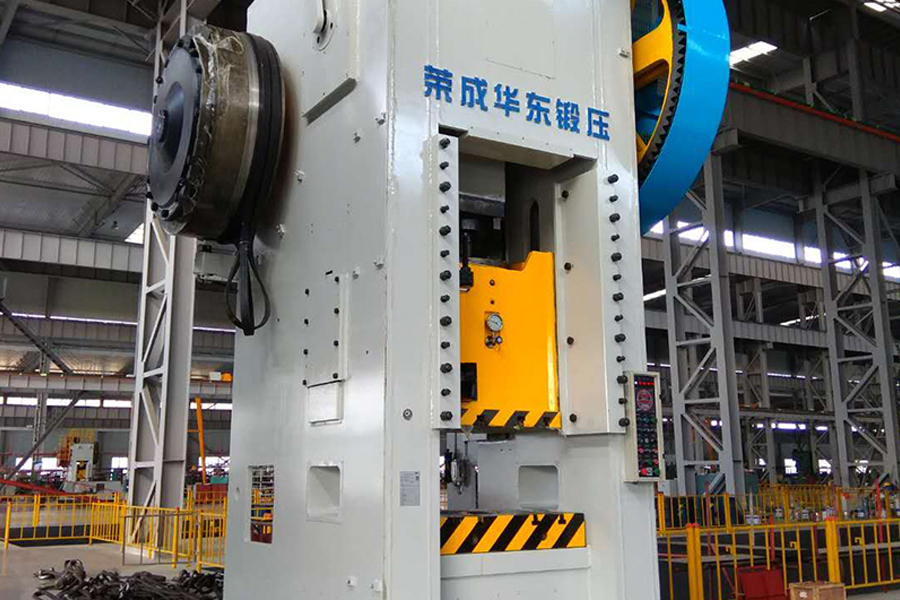
Hot forging press is a heavy machinery widely used in the field of metal processing, which processes metal materials into precision parts of various shapes and sizes through high-temperature heating and high-pressure forging.
The hot forging press heats the metal billet at high temperature to reach the plastic deformation temperature, and then uses the pressure of the press to apply external force to the billet through the mold, causing plastic deformation and obtaining the required shape and size of the part. The hydraulic hot forging press uses a hydraulic system to transmit pressure and drives a hydraulic cylinder to achieve linear motion of the slider; The mechanical hot forging press converts the rotational motion of the electric motor into the reciprocating motion of the slider through a crank slider mechanism or a crank wedge mechanism.
Characteristics of hot forging press:
high-precision:Hot forging presses have high rigidity and accuracy, which can ensure the dimensional accuracy and surface quality of forgings.
High efficiency:The hot forging press adopts a high-speed and efficient transmission system, with multiple slider strokes and high production efficiency.
High degree of automation:Hot forging presses are easy to achieve automation and large-scale production, reducing operating costs and improving production efficiency.
Energy conservation and environmental protection:The hot forging press adopts energy-saving technology, optimizes process parameters, reduces energy consumption and noise, and meets environmental protection requirements.
Strong adaptability:Hot forging press can adapt to the processing needs of forgings of different materials, shapes, and sizes.